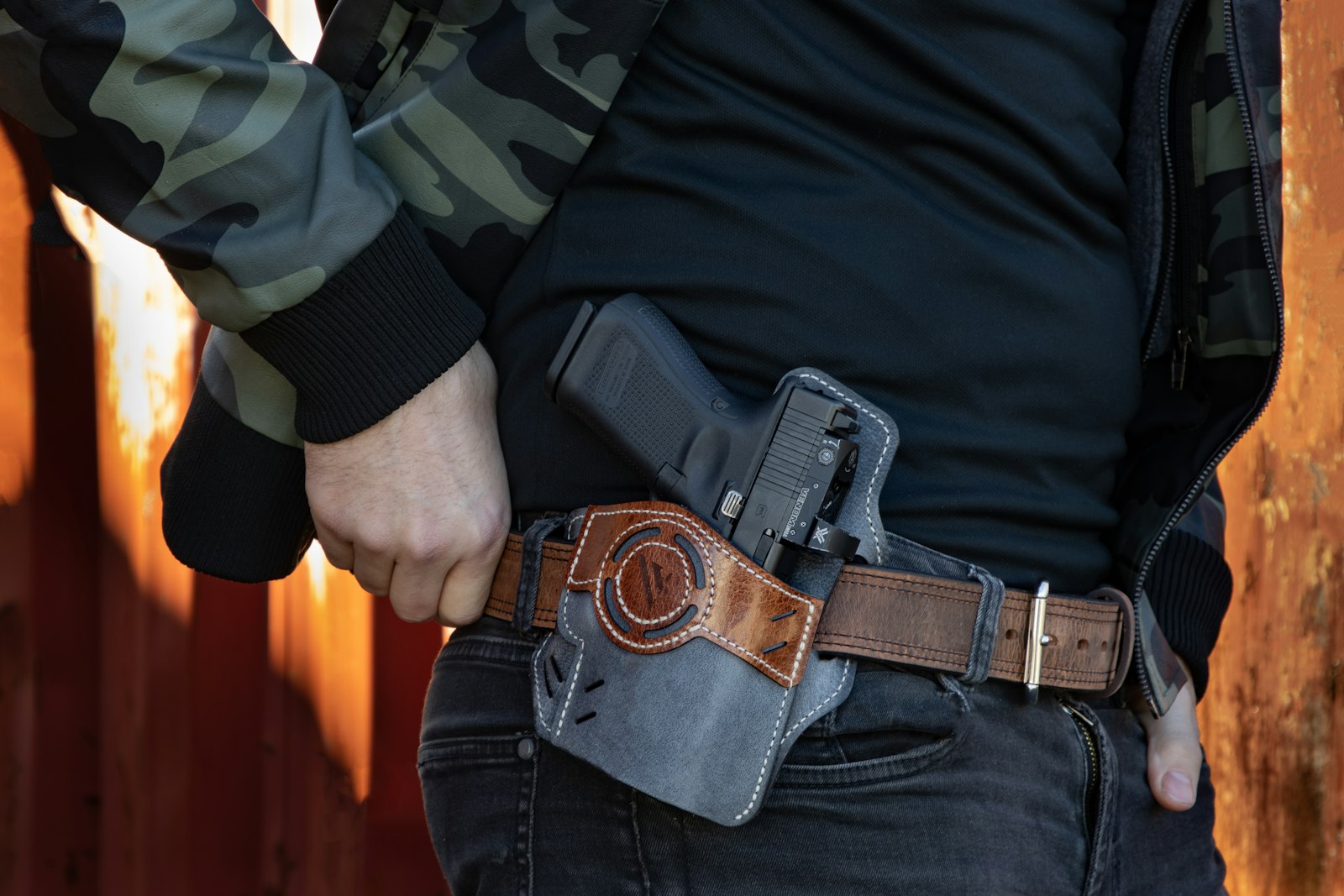
Yes. An adult who can legally own a gun can carry it openly in Miami and anywhere else in Florida, with no permit, since September 2025. That is because a state appeals court struck down Florida’s open-carry ban in McDaniels v. State on September 10, 2025, and the Attorney General told every police department and prosecutor in the state to stop enforcing it. What did not change is just as important: a visible gun in a bar, a school, a courthouse or a polling place is still a crime, pointing or waving it is still a crime, and a felon with any gun is still a felony.
What the McDaniels ruling actually did
Section 790.053 is Florida’s 1987 law making it a misdemeanor to carry a firearm openly. Stanley Victor McDaniels was arrested under it in Pensacola on July 4, 2022. On September 10, 2025, a three-judge panel of the First District Court of Appeal reversed his conviction and held that the ban violates the Second Amendment under the U.S. Supreme Court’s Bruen and Rahimi decisions.
No other Florida appeals court had decided the question, so the First DCA’s ruling binds every trial court in the state. Five days later, on September 15, Attorney General James Uthmeier sent a memo to police chiefs, sheriffs and state attorneys calling open carry “the law of the state,” according to WLRN, and told them not to arrest or charge law-abiding adults for carrying a visible gun. Local 10 reported that South Florida agencies stopped enforcing the ban that week.
One detail matters for anyone reading the statute books: the Legislature has not repealed section 790.053. The ban is still printed in the Florida Statutes. It is simply unenforceable under the court’s ruling and the Attorney General’s reading of it. Florida already allowed concealed carry without a permit under a 2023 law, so the state now permits both open and concealed carry without a license.
Can I open carry in Miami now?
Yes, with the same limits that apply to concealed carry. You must be at least 21, you must not be a felon or otherwise barred from owning a gun, and you must stay out of the places listed in section 790.06(12)(a). The Attorney General’s formal opinion of October 20, 2025 (AGO 2025-02) confirms that list is untouched by McDaniels. It includes:
- Schools, colleges and school events
- Courthouses and courtrooms
- Police stations, sheriff’s offices and jails
- Polling places
- Meetings of the county commission, a city council or the Legislature
- Any bar, or the part of a restaurant that mainly serves alcohol
- Airport passenger terminals past security
Carrying a gun into one of those places, openly or concealed, is still a crime no matter how you carry it everywhere else.
Where people are still getting arrested
The open-carry arrests that used to be routine on Miami Beach and in downtown Miami have stopped. The arrests that replaced them fall into four groups.
Improper exhibition. Section 790.10 makes it a first-degree misdemeanor to show a gun “in a rude, careless, angry, or threatening manner” in front of another person. A holstered pistol on your hip is open carry. Pulling it out during an argument in a parking lot is improper exhibition, and the Attorney General’s opinion says that section is fully enforceable.
Prohibited places. A visible gun in a bar on Ocean Drive, in a school pickup line or at a county commission meeting is a crime under section 790.06(12), and the visibility makes it easy to prove.
Trespass after warning. A business can ban guns on its property. If a store or restaurant tells you to leave because you are armed and you stay, that is trespass, and the gun makes it a more serious case. Local 10 confirmed that private businesses keep this right.
Possession by a felon. Nothing in McDaniels touches section 790.23. A felon who carries openly has simply made the felony easier to spot.
Security guards and private investigators still need a Class G license to carry on the job.
What this means if you are charged in Miami-Dade
If you were arrested for open carry under section 790.053 after September 10, 2025, the charge cannot stand. The Attorney General’s guidance tells the State Attorney’s Office not to file it, and a judge in the Eleventh Circuit is bound by the First DCA’s ruling. Your lawyer should ask for a dismissal at the first hearing.
If you were arrested for open carry before that date and the case is still open, or you took a plea, the ruling may give you grounds to reopen it. That is an appeals question with its own deadlines.
If the charge is improper exhibition, carrying in a prohibited place, or trespass with a firearm, the McDaniels ruling will not help. Those cases turn on facts: what you did with the gun, where you were standing, and whether anyone told you to leave. A first-degree misdemeanor in Miami-Dade carries up to a year in jail, and any gun charge can affect a non-citizen’s immigration status.
Practical steps: keep the gun holstered and out of your hands in public. Know the prohibited-places list, and treat any “no firearms” sign as a lawful order to leave. If police stop you while carrying, say that you are armed, keep your hands visible and do not reach for the weapon. If you are arrested on any gun charge, say that you want a lawyer and stop talking.
Is this final?
Not necessarily. The ruling came from one district court of appeal, and the Legislature has not changed the statute. The Florida Supreme Court could take the question up, or another district could rule the other way. As of November 2026, neither has happened and the Attorney General’s guidance stands.
At a glance
- Open carry has been legal statewide since September 15, 2025, following McDaniels v. State (First DCA, September 10, 2025)
- Section 790.053 is still on the books but cannot be enforced
- Still illegal: guns in bars, schools, courthouses, police stations, polling places and government meetings (section 790.06(12))
- Still a crime: improper exhibition (section 790.10), possession by a felon, staying on private property after being told to leave
- You must be 21 and legally allowed to own a gun
- Arrested for open carry after September 10, 2025: ask for dismissal at the first hearing
This article is general information about Florida law and Miami-Dade procedure as of its publication date. It is not legal advice. Laws change, and the facts of a case matter.